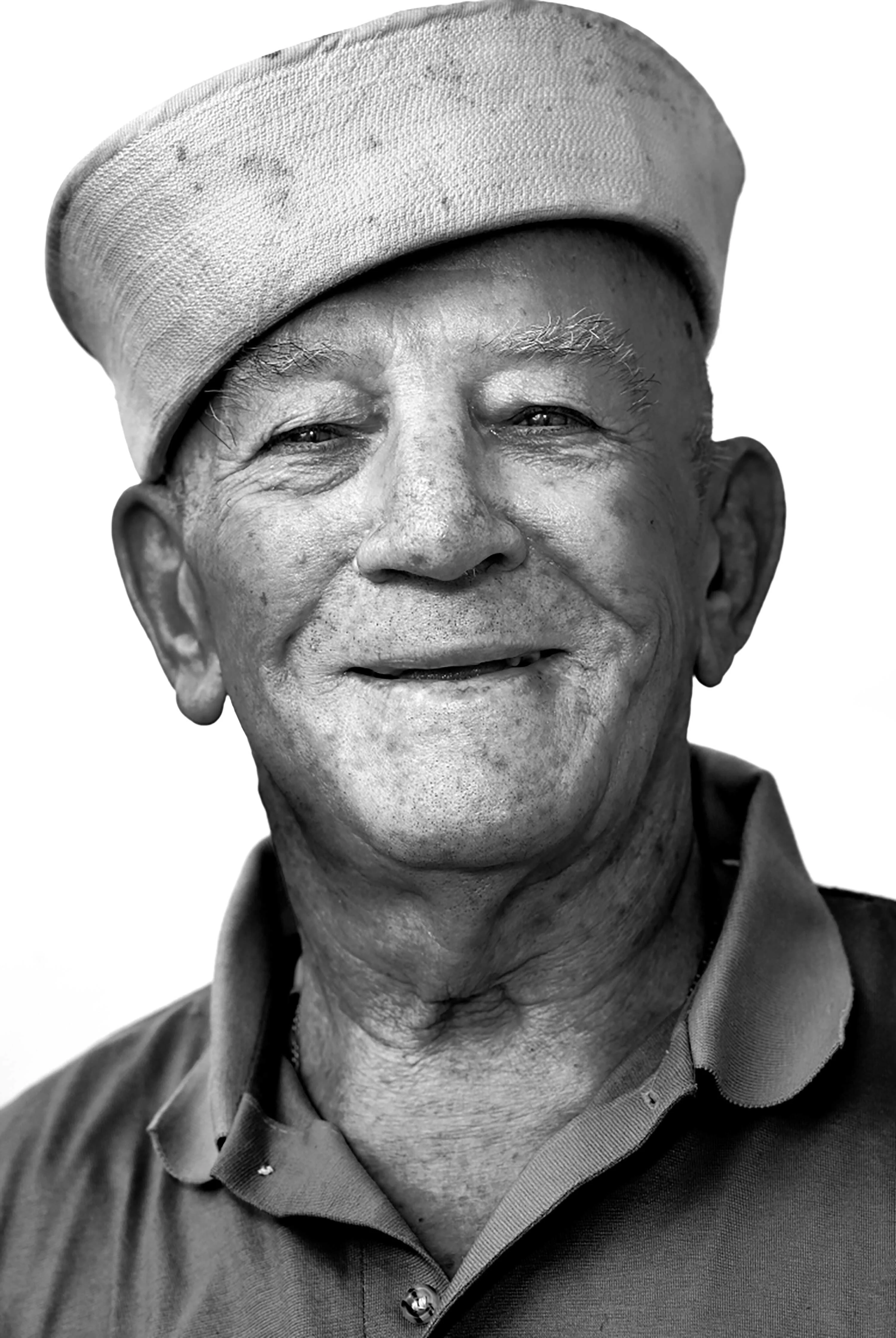
Louis Lezon
Aviation Machinist Mate First Class, U.S. Navy
WWII
“"In late December 1942, I was assigned to a Carrier Aircraft Service Unit in Fort Island, Hawaii. On the way to my outfit, our ship passed the remains of the Japanese attack: planes and ships underwater, the water filled with oil. We were called to stand at attention and hand-salute because the divers were bringing up a black bag from the oily waters. We didn't know what it was, but we stood and saluted. I was just a young lad; it was touching.
At Kaneohe Bay, I serviced planes that were coming in from the mainland. Once my crew and I were assigned to replace a gas tank, and it wasn't aligning properly. An impatient officer among the others asked, 'Can I get my foot in there yet?' I looked up to find a gentleman in a flight suit that said Commander O'Hare. He was a big lanky guy. He stuck his long leg in there and took a couple of pokes and said, 'I'm satisfied. Get it all together, let me know what the outcome is. I'm missing out on my flights.' After it was assembled, to my dismay, I was told that it was no good. One of the chiefs said, 'Well, Commander O'Hare is going to get a new plane.' Shortly after, he and his plane disappeared when he was leading a fight against two Japanese bombers. They named the Chicago airport O'Hare in memory of him.
My brothers and I were in the service at the same time. One went up in the Army and did severe fighting with General Patton. Another was on a destroyer in the Pacific Theater. There was the Marine who got injured in Iwo Jima. When the war ended, my mother's prayers were answered: we all made it home. On my last day, my lieutenant told me that the war was over and that I was eligible to go home on the point system. He said, 'But I'll make a deal with you. You're a first-class mechanic. I'll give you a chief's rating.' I said no. I told him: 'I promised a young girl I would come home and we would get married.' And I came home. And here it is sixty-four years later, and we're still together."
Edited from The Last Good War, published by Welcome Books, text by Veronica Kavass”