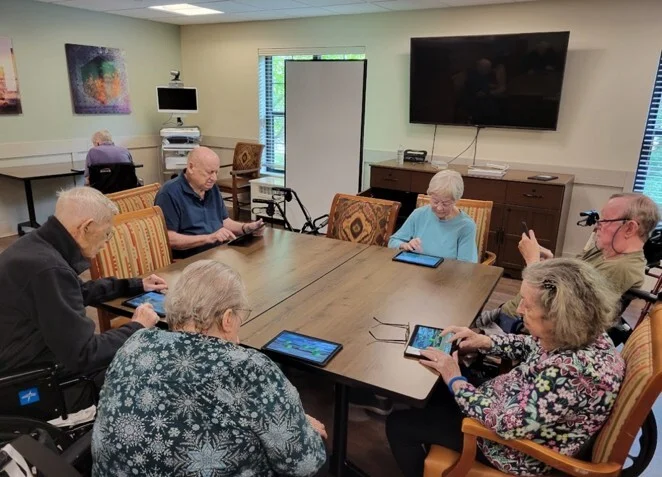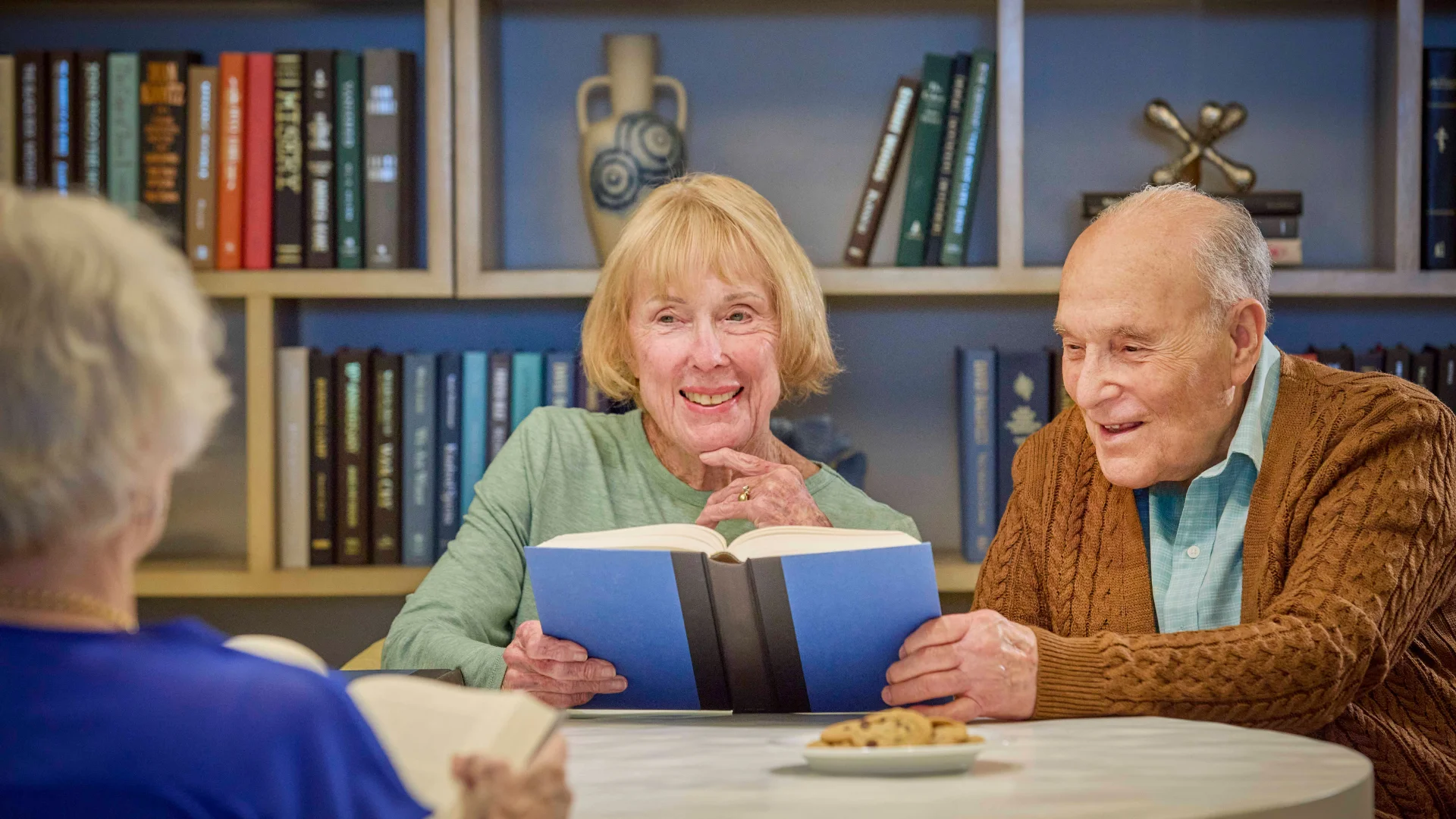
Belmont Village Senior Living communities nationwide have long built social engagement and cognitive training into daily life, models now affirmed by the World Health Organization's newest guidance on reducing dementia risk.
More than 57 million people worldwide live with dementia, with up to 45% of that risk traced back to modifiable lifestyle factors, including social isolation and physical inactivity. Recently, the World Health Organization's updated Risk Reduction of Cognitive Decline and Dementia guidelines identify social engagement and cognitive training as key interventions for protecting brain health, placing greater emphasis on staying socially connected than previous reports. The guidance also reflects growing confidence that regularly challenging the brain through reading, learning new skills, puzzles, and other structured cognitive exercises supports long-term brain health, exactly the model Belmont Village Senior Living has built its communities on for nearly three decades.
The findings matter because dementia risk, unlike many health conditions, responds directly to daily choices and daily environment. Nearly half of that risk is within reach of ordinary habits: who you talk to, what you learn, how connected you feel to a community. For families weighing senior living options, the guidance reframes the question from simply "is my parent safe" to "is my parent's mind being challenged and their world staying socially rich."
"This guidance confirms something we've built our communities around for nearly three decades: connection and cognitive engagement aren't extras, they're essential care," said Joyce Mahoney, CTRS, APRS, Regional Vice President of Memory Care and Programming at Belmont Village Senior Living. "The brain thrives on stimulation and relationships, and our residents experience both every single day."
That commitment to cognitive engagement and social connection is also reflected in Belmont Village Senior Living’s longstanding partnerships with leading academic and healthcare institutions, including Vanderbilt University, UCLA, USC, UC San Diego, UC Berkeley and Rice University to build the exact interventions the WHO now points to as protective: sustained social engagement and structured cognitive training.
Rice University's Lifelong University, offered through Rice's Glasscock School of Continuing Studies as part of Belmont Village Senior Living's Lifelong Learning program, brings structured cognitive training to residents at all 33 Belmont Village communities nationwide through non-credit, college-level courses. Rice faculty lead virtual sessions on subjects from Martian geology to Art Deco design and Broadway history, with Belmont Village Senior Living staff facilitating live discussion breaks so residents connect the material to their own experience, turning a solitary lecture into a shared, social one. Patricia Will, founder and CEO of Belmont Village Senior Living, has said the program answers a question the industry struggled with for years: how to deliver real intellectual enrichment beyond a book club or a game of bingo.
Vanderbilt University helped develop the evaluation tool used to measure the efficacy of Circle of Friends®, Belmont Village Senior Living's signature early memory care program. The program uses small-group therapeutic activities to support cognitive function, while pairing structured cognitive exercises with the social interaction that the WHO identifies as protective against decline.
UCLA has been a long-time partner of Belmont Village Senior Living, fostering intellectual and social engagement. In 2009, Belmont Village Westwood opened near the UCLA campus as the company's first university-affiliated community, developed with the UCLA Emeriti and Retirees Joint Housing Committee to encourage ongoing connection with the university. The UCLA Semel Institute for Neuroscience and Human Behavior, working alongside the International Alzheimer's Association, also contributed to the development of Circle of Friends® Through Belmont Village Senior Living's offerings, Belmont Village Westwood residents can participate in live undergraduate courses taught by UCLA faculty through the university's Longevity Center Senior Scholars program.
UC Berkeley's Retirement Center, As Belmont Village Senior Living’s second university-affiliated community, Belmont Village Albany partners with the UC Berkeley Retirement Center to bring university programming directly to the residents. The collaboration features quarterly lectures led by UC Berkeley faculty, creating ongoing opportunities for intellectual engagement and lifelong learning within the community.
USC's Davis School of Gerontology, part of Belmont Village Senior Living’s Care Alliances network, anchors the company's longevity research, translating the latest science on modifiable dementia risk, the same factors named in the WHO guidance, into program design and staff training across Belmont Village communities.
UC San Diego's Living Lab grew out of a collaborative resilliance research study and now embeds academic research directly into daily programming at Belmont Village La Jolla. The partnership applies current findings in aging and cognitive science, incorporating social engagement and structred brain training strategies highlighted in the WHO guidance.
"We see the impact of this every day," Mahoney said. "Residents who stay socially active and mentally engaged aren't just filling time. They're actively protecting their brain health, and that's exactly what this new WHO guidance is telling all of us to prioritize."
Mahoney recommends three simple, evidence-backed ways people of all ages can support brain health:
- Staying mentally active through reading, puzzles and learning new skills
- Maintaining social connections and regular interaction with others
- Exercising regularly to support healthy brain function
"You don't need a special program to start," Mahoney said. "Call a friend, pick up a book, take a walk. The science is clear that these small, consistent habits add up to real protection for your brain over time."