Senior Yoga Benefits for Joint Health and Relaxation
Yoga has become increasingly popular among older adults because it offers a gentle way to stay active. But there's more than just one type of yoga, and the right type for one older adult may not be the best fit for another.
Key Takeaways
- Yoga is a low-impact, total body activity that may support balance and joint mobility.
- People can modify many styles of yoga to fit their needs.
- Older adults can consult with their healthcare team before starting any new yoga program, as some poses may not be appropriate given their health status.
Potential Benefits of Yoga for Seniors
Yoga combines physical postures, breathing techniques, and mindfulness practices for a holistic form of exercise. While every person's experience is different, many older adults enjoy yoga because it can address multiple aspects of wellness simultaneously.
- Relaxation and Mental Health: Many yoga classes incorporate breathing exercises and mindfulness techniques, which some people find helps them manage day-to-day stress.
- Improved Joint Health Through Low-Impact Movement: Unlike many high-impact activities, yoga places relatively little stress on the joints.
- Pain Relief: Some senior citizens report less discomfort and stiffness after participating in regular yoga sessions.
- Better Flexibility: Many yoga poses involve stretching major muscle groups throughout the body. Over time, regular stretching may help maintain or improve flexibility, making everyday activities (such as reaching and dressing) easier.
- Better Balance: Many yoga poses require participants to engage core muscles and maintain stability, which may help support balance.
- Adaptable for Various Mobility Levels: One of yoga's greatest strengths is its flexibility. Instructors can often modify poses to accommodate different physical abilities.
- May Help Manage IBS Symptoms: Some people living with irritable bowel syndrome (IBS) find that stress-management techniques like yoga help them feel more comfortable.
- May Help Manage Scoliosis Symptoms: Certain poses may help some individuals with scoliosis improve posture and comfort.
Types of Yoga Seniors May Enjoy
Not all yoga practices are the same. Some emphasize relaxation and stretching, while others focus on greater physical challenge.
Chair Yoga
Also called:
- Seated yoga
- Adaptive yoga
- Chair yoga for seniors
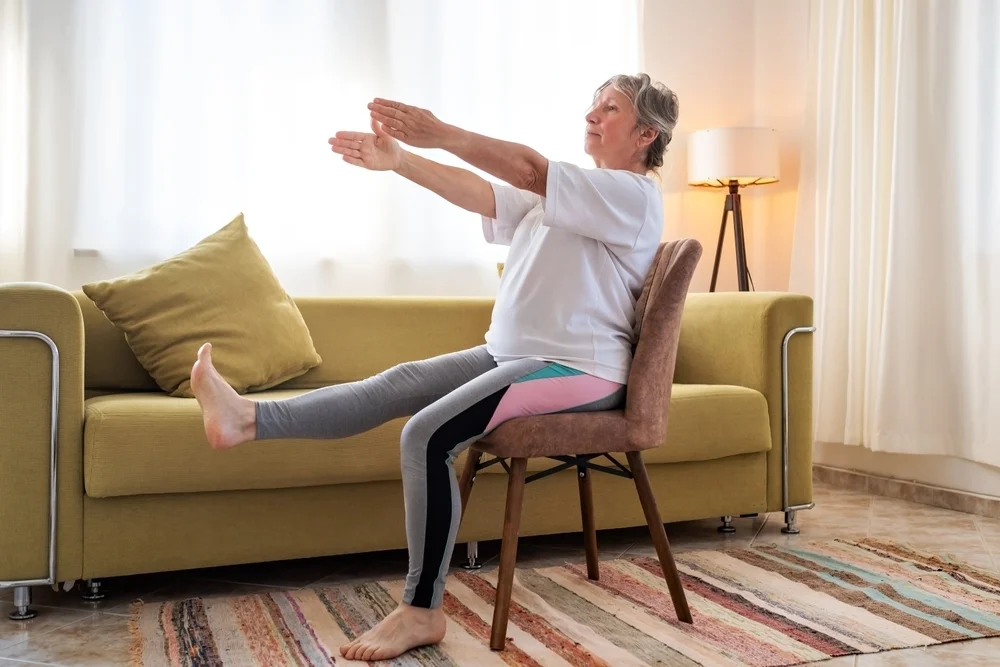
Gentle chair yoga uses a sturdy chair for support during seated and standing poses. This beginner-friendly yoga workout allows participants to experience many of yoga's benefits without getting on the floor.
Popular Yoga Poses (Asana):
- Seated Mountain Pose
- Seated Cat-Cow
- Seated Twist
- Chair Warrior
- Seated Forward Fold
Who May Benefit from Chair Yoga:
- Older adults with limited mobility
- People who have difficulty standing for long periods
- Seniors seeking a beginner yoga class
Vinyasa Yoga
Also called:
- Flow yoga
Vinyasa yoga links breathing with movement, creating a sequence of flowing poses. Classes may range from gentle to more physically demanding, depending on the instructor.
Popular Vinyasa Yoga Poses:
- Downward-Facing Dog
- Warrior I
- Warrior II
- Child's Pose
- Plank Pose
Who May Benefit from Vinyasa Yoga:
- Active older adults
- Individuals looking for a more energetic practice
Iyengar Yoga
Iyengar yoga emphasizes proper alignment, often incorporating props like blocks or straps to help people achieve correct form.
Popular Iyengar Yoga Poses:
- Mountain Pose
- Triangle Pose
- Tree Pose
- Bridge Pose
- Supported Forward Fold
Who May Benefit from Iyengar Yoga:
- Beginners
- People interested in improving postural awareness
Yin Yoga
Also called:
- Passive yoga
- Meditative yoga
Yin yoga focuses on holding gentle stretches for extended periods, often several minutes at a time. The practice emphasizes relaxation and flexibility rather than strength or vigorous movement.
Popular Yin Yoga Poses:
- Butterfly Pose
- Dragon Pose
- Sphinx Pose
- Child's Pose
- Reclined Twist
Who May Benefit from Yin Yoga:
- People looking to improve flexibility
- Older adults interested in mindfulness
Considerations Before Beginning a New Yoga Routine
Before starting yoga exercises, seniors should take time to consider several important factors.
- Personal Medical History: Health status can influence which yoga sequences may be appropriate; a healthcare provider can help seniors determine whether modifications are needed or if a certain type of yoga should be avoided altogether.
- Fitness Goals: Some people get into yoga for the physical components. Others explore yoga for the mindfulness aspect. Determining personal fitness goals can help seniors determine which practice is right for them.
- Doctor Recommendations: Not every type of yoga pose is safe for everyone; a licensed healthcare provider can help seniors decide if yoga or another type of activity, like tai chi, is best suited for their needs.
Final Thoughts
Yoga offers older adults an adaptable way to stay active. Because there are many different styles available, seniors can often find an approach that aligns with their interests and personal goals.
Disclaimer: This article is for informational purposes only and does not constitute professional medical advice, express or implied. It cannot diagnose, treat, cure, or prevent any disease or condition. Always discuss changes in diet or physical activity with a licensed healthcare provider.