Practical Ways for Older Adults to Socialize and Stay Connected
When you want more connection but do not know where to find it, even a quiet afternoon can feel especially long. Making new friends may also seem harder than it once did, particularly when life changes limit your opportunities to spend time with others. While making new friends as an older adult may feel challenging, the truth is that socializing doesn't have to be complex. Small, familiar moments like sharing a lunch with a neighbor can be the springboard to meaningful relationships.
Key Takeaways
- Regular social interaction can support older adults' emotional, cognitive, and physical health.
- Seniors may face barriers to socialization, such as lack of transportation, mobility challenges, changes in hearing, and more. These barriers may require practical adjustments, but they do not have to mean seniors can no longer engage with others.
- Changes in someone's usual routines or communication patterns may signal that they need more opportunities for connection.
Ways for Older Adults to Socialize
Spend Time with Different Generations
Intergenerational relationships are relationships between people of different generations; they allow older adults and younger people to share new perspectives and learn from each other. Intergenerational relationships can look different for everyone. They might include grandparents cooking family recipes with grandchildren or two acquaintances from an exercise group getting coffee together after class.
Join a Supportive Community
Supportive communities give older adults regular opportunities to spend time with people who share their interests. This might mean joining a book club at the local library, attending events through a faith community, or sharing meals with neighbors in a senior living community. Look for a setting where familiar faces and recurring activities make it easier to form relationships over time.
Consider Companion Care
Companion care gives older adults regular opportunities to socialize, especially when family members live far away or cannot visit often. A companion might join an older adult for a walk, play cards, or attend a local event with them. Services vary by provider, so families should ask what each companion care program includes and whether it offers the right type of support.
Turn Daily Activities Into Social Opportunities
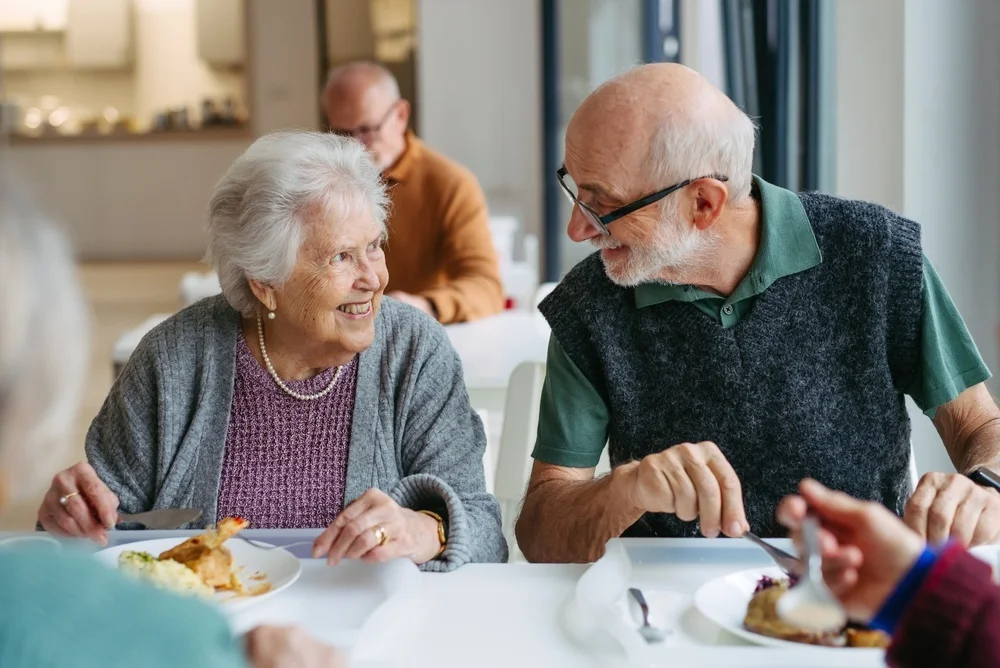
Lunch with neighbors, walks with friends, calling a relative over morning coffee—these kinds of everyday routines can create connections.
Take a Class or Join a Group
Whether it's a library book club or a creative writing class at a community college, group classes provide the opportunity for shared interests, giving seniors a built-in conversation starter.
Volunteer for a Meaningful Cause
Volunteering can help older adults meet people who share their values. Look for a role that matches your interests, schedule, and abilities, whether that means supporting an animal rescue or helping at a community event.
Use Technology to Maintain Relationships
Technology can help older adults stay connected when in-person visits are difficult. A phone call with a friend, group message with family, or online class can create more opportunities to socialize. If a new device or app feels overwhelming, ask someone to set it up and practice the same few steps together. What's important to remember is that online communication does not need to replace time spent in person. It simply offers another way to maintain important relationships.
Overcoming Barriers to Socializing
Older adults may face circumstances that contribute to social disconnection, like limited transportation, changes in mobility, hearing loss, vision changes, and the loss of a loved one.
A helpful approach to addressing these barriers is to identify specific ones, then address them individually. For example, if your older loved one wants company but cannot drive, your family can explore solutions like having someone come to the senior's home instead of them coming to you.
Signs an Older Adult May Feel Lonely or Isolated
One of the largest obstacles to addressing senior loneliness is a lack of awareness. Families can help here by checking in with their loved one when they notice potential signs of loneliness like:
- Spending much more time alone than usual.
- No longer calling or visiting friends.
- Losing interest in activities the person once enjoyed.
- Frequently mentioning that no one visits or calls.
- Missing recurring gatherings without a clear reason.
- Struggling to leave home because of transportation or mobility.
- Becoming unusually quiet during family conversations.
Keep in mind that these changes do not confirm loneliness; they simply offer a reason to start a respectful conversation. Your family can ask a specific question, such as, "Have you been missing your weekly lunch group?" rather than assuming how the other person feels.
How Socialization Can Support Healthy Aging
According to the Centers for Disease Control and Prevention, social isolation and loneliness can raise the risk of physical and mental health conditions. Specifically, research has linked social isolation and loneliness with a higher risk of cognitive decline, heart disease, depression, and other health concerns. While these findings do not mean that loneliness directly causes a particular condition, they do show why social connection deserves attention as part of healthy aging.
Making Connection Part of Everyday Life
Socialization feels more manageable when it grows from an older adult's interests and becomes part of a familiar routine. A weekly class, regular family call, or standing lunch date can provide something enjoyable to anticipate without overwhelming the calendar.
FAQs
How can older adults make new friends?
Older adults can meet people through volunteering, library events, and group fitness classes.
How can family members help an older adult socialize?
Family members can play a large role in helping older adults socialize. Families can start by asking their relatives which people or activities they miss, then address practical barriers like transportation. Once you have identified the barrier, your family can offer a specific option to address it, like arranging a ride to a weekly class.
Disclaimers: This article is for informational purposes only.