Do Memory Games Help Dementia?
Memory games can help a person living with dementia stay mentally active, especially when the activity feels familiar and achievable. However, no game can reverse dementia or stop it from progressing. For families, the goal should be to create an enjoyable experience, not to test a loved one's memory.
Key Takeaways
- Memory games can provide mental stimulation and opportunities to connect with others.
- Current research does not show that ordinary brain games prevent, cure, or stop dementia.
- The right activity matches the person's interests and current abilities.
- Families can simplify a game or try something different when it causes frustration.
What Are Memory Games, and Can They Help People Living With Dementia?
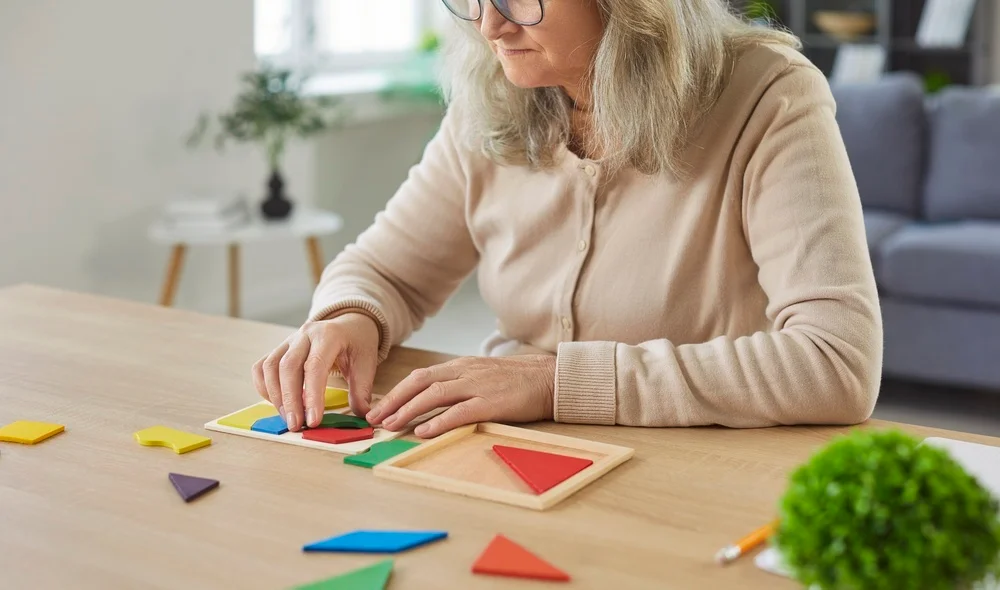
Memory games ask someone to recall information, recognize patterns, solve problems, or focus their attention. Common examples include matching cards, word games, and puzzles.
What Does Scientific Evidence Say About Brain Games?
Observational Studies
Observational studies have found that older adults who participate in mentally stimulating activities tend to develop dementia less often. However, these studies cannot prove that the activities caused the difference. Participants' health or early cognitive changes may also influence how often they pursue mentally stimulating hobbies.
Interventional Studies
Interventional studies provide a stronger test because researchers assign participants to cognitive training programs. These studies suggest that training may improve certain practiced skills. One large trial also associated computerized speed-of-processing training with fewer dementia diagnoses over 10 years, but researchers have not found the same results for every type of training or shown that ordinary brain games offer this benefit.
What Memory Games Can Do
When a game suits the person, it may offer:
- Mental stimulation through matching, recalling, or problem-solving
- An engaging way to spend part of the day
- A familiar activity that fits into an established routine
- Opportunities to connect with family members or friends
- A sense of accomplishment when the challenge feels manageable
What Memory Games Can't Do
Memory games cannot:
- Cure dementia
- Stop dementia from progressing
- Replace an evaluation or care from a licensed healthcare provider
- Meet all the daily support needs of someone living with dementia
What Makes a Memory Game More Helpful?
Pay attention to how your family member responds rather than how difficult the game appears. The right activity should capture their interest without making them feel tested.
- Keep it enjoyable. Choose pictures, words, or subjects that mean something to the person.
- Offer an attainable challenge. Make the activity interesting, but avoid setting it up as a test.
- Build it into a routine. A familiar time and setting may make the activity easier to begin.
- Adapt the rules. Use fewer cards, larger puzzle pieces, shorter turns, or no time limit.
Remember that each day is different; a game that works well one day may feel difficult the next, so follow the person's lead.
What Should You Do If a Memory Game Becomes Too Hard?
If your family member seems tired or discouraged, pause the game or make it easier. You might reduce the number of choices, offer a clue, or play together without keeping score.
You can also switch to an activity that places less emphasis on remembering the correct answer. The point is to share a positive moment, not prove what someone can recall.
Memory Game Ideas for People Living With Dementia
There is no universally "best" memory game. Start with something familiar, then adjust it based on the person's response.
- Matching games: Place a few matching picture cards face up and pair them together. If that feels too easy, turn the cards facedown.
- Card games: Choose a game the person already knows. You can remove unnecessary cards or skip scoring.
- Crossword puzzles: Look for short clues and large print. Working on the answers together can turn the puzzle into a conversation.
- Digital games: Digital games on handheld tablets can offer large images and straightforward activities. Avoid games with time limits or distracting advertisements.
Let the person's interest guide the activity. Finishing the game matters less than enjoying the time spent together.
Are There Other Hobbies That May Support Brain Health?
Games are only one way to stay mentally engaged. Reading, painting, gardening, singing, crafting, and social activities can also give someone opportunities to think or connect with others.
Focus on Connection, Not a Perfect Score
Memory games can add interest and connection to life with dementia, but they should never feel like an exam. Choose activities that fit the person's abilities and energy that day. Sometimes a simple game that starts a conversation will mean more than completing a difficult exercise marketed as "brain training."
Compassionate Dementia Care at Belmont Village
At Belmont Village, we build cognitive engagement around each resident's needs and abilities. Depending on the community and the level of support someone needs, that may include our Circle of Friends program for residents experiencing mild cognitive impairment. Residents with advanced dementia may benefit from a Memory Care Neighborhood.
FAQs
What is the best memory game for people living with dementia?
When looking for a memory game for a loved one living with dementia, look for a game that matches their current abilities and what you think they will enjoy. For some people, that's matching pictures. For another, that may be playing cards. And don't be afraid to pivot; if your loved one doesn't like the activity (even if they did the day before), try something else.
What are the stages of dementia?
Healthcare providers often describe dementia as mild, moderate, or severe:
- Mild dementia begins to affect everyday functioning.
- As the condition progresses, a person generally needs more help with daily tasks.
- In its most severe stage, dementia can make someone dependent on others for basic activities, such as eating and personal care.
(These stages offer a general framework, not an exact timeline.)
Are there hobbies that lower the risk of dementia?
Current evidence does not show that puzzles, games, or another specific hobby will prevent dementia.] That said, reading, creative projects, and social activities can still offer meaningful ways to stay engaged.
Disclaimers: This article is for informational purposes only.