The normal effects of aging—hearing loss, arthritic knees, fading eyesight, and memory lapses—have long been accepted as facts of life. But discoveries about gene expression, chronic inflammation, cellular damage, and other biological processes are shifting how researchers, physicians, and consumers think about aging. The bottom line: More people are spending more money on their health before their bodies begin to fail—and North Texans are here for it.
“Our mindset has changed,” says Chandramallika Basak, director of the Lifespan Neuroscience and Cognition Lab at the Center for Vital Longevity at UT Dallas. “It used to sound like science fiction, but we have stopped thinking of aging as inevitable. We don’t have to suffer through aging. We can influence aging, and we can take control over it.”
Basak is among the many North Texas scientists exploring new ways to preserve function, reverse damage, and extend health span. What’s more, businesses are beginning to form around their research, and investors are paying attention and writing checks. Medical doctors, too, are thinking differently. Some who once spent all their time trying to make the sick well have pivoted to focus on making the well weller. And patient demand is growing as consumers hear about cutting-edge tech and therapeutics—and the high-profile individuals who flaunt them.
Together, these changes demonstrate that the longevity industry is no longer fantasy or fringe. Analysts estimate the industry will generate nearly $28 billion worldwide this year and more than double over the next decade, as consumers increasingly seek testing, preventive care, personalized medicine, and other tools designed to help them stay healthier longer.
The Elixir of Life
Longevity isn’t a new idea. “People have been looking for the elixir of life since the old days,” Basak says, referring to ancient Greeks, European crusaders, and Spanish conquistadors. What is new, she stresses, is that science has given us a greater understanding of aging and a cascade of advancing interventions.
Pegasus Park is playing a key part in both. At the Dallas campus, Curve Biosciences is developing AI-powered blood tests designed to detect chronic diseases earlier. Mynd Immersive uses virtual reality to help reduce loneliness and cognitive decline among older adults. And Highlander Health Partners backs the next generation of personalized medicine.
CubicBio is another example of science at work. Ramon Coronado opened his company at Pegasus Park’s BioLabs in 2025. He built his previous ventures in San Antonio but chose Dallas for his longevity research—efforts currently center around whether the body’s natural killer cells can identify and eliminate zombie cells (damaged or stressed cells that stop dividing but refuse to die). Its shared laboratory space and equipment meant the scientist and serial entrepreneur didn’t need to spend months or millions of dollars building a lab from scratch.
“The capital efficiency here is hard to compare with anything else we could build anywhere in the world,” he says about the ability to set up residency at BioLabs and start experiments immediately. “There aren’t many places in the world where you can [do that].” Just as important, Coronado found support in a city he calls daring. “The other difference is harder to measure—entrepreneurship or maybe risk tolerance,” he says. “North Texas is probably better than anywhere else I’ve experienced.”
Attracting companies like CubicBio is exactly what Pegasus Park was designed to do. “Make DFW a little stickier” is how director of LH Capital and Lyda Hill Philanthropies Matt Crommett describes it. That said, North Texas has never lacked for brainpower. Researchers at UT Southwestern, UT Dallas, UT Arlington, and other institutions have spent years advancing developments in aging, neuroscience, regenerative medicine, and chronic disease. What was missing until now was the connective tissue that helps scientific discoveries become companies, attract investment, and grow in place.
“As other life science hubs were growing—Boston, San Francisco—the innovation here was being captured and told, ‘You have to leave. You need to go elsewhere,’” says Gina Ford, CEO of BioNTX. “The recognition now is that’s not the case.”
Ford lived that story. Early in her career, she was building a future in biotech and pharmaceuticals while living in Dallas, but her ambitions felt stifled. Dissatisfied with the limited opportunities in the region, she spent 15 years on the West Coast helping scientific founders build companies. When she came back to North Texas in 2023, she found a different environment from the one she’d left. Today, her mission is to ensure no one has to make the choice she did. “It’s not just that it’s here,” she says. “We are being very intentional that it stays here and that it grows.”
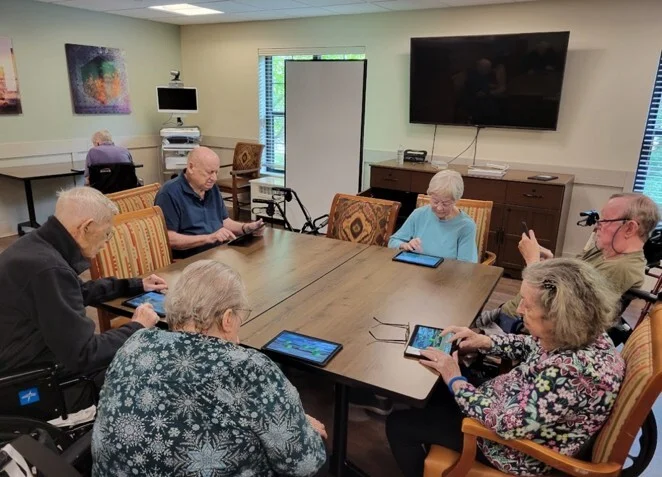
Basak’s work reflects how North Texas has changed. She co-founded brain health startup Neuroflight.ai in 2025 on her research on cognitive aging. Supported by grants from the Darrell K Royal Research Fund and UT Dallas’ Big Idea Competition, the company is piloting its brain-training tech in senior living communities, including Belmont Village Turtle Creek, while also building an app for a broader audience.
Basak sees parallels to the way DFW grew into an information technology hub: Once enough talent and money clustered together, innovation accelerated. She believes biotechnology is beginning to reach that same point.
Redefining the Golden Years
At the crisp, minimalist Turtle Creek office of Cenegenics, patients are assessed and presented with plans designed to help them become healthier versions of themselves. The Dallas outpost of the Las Vegas-based company opened in 2009, long before “longevity” became a buzzword. A pioneer in what was being called “age management medicine” in the late 1990s, Cenegenics’ primary focus is evidence-driven disease prevention and performance optimization. Dr. Castel Santana recently moved to Dallas to work as its medical director, though he’s been a family and functional medicine physician for a decade. “Everything in functional medicine, looking at root-cause disease, is really longevity,” he says. Like so many physicians, Santana wanted to do more than treat disease and keep people alive longer: He wanted to prevent disease and keep people healthy longer.
It’s an idea that’s found a receptive audience in North Texas. The executives, entrepreneurs, and other high performers Santana sees don’t want to wait until illness forces them to change their habits. They arrive looking for data, guidance, and proactive solutions—not prescriptions after something has already gone wrong.
They are willing to pay tens of thousands of dollars for whole-body MRIs, VO2 max testing, advanced cardiovascular imaging, continuous glucose monitoring, genetic analysis, and hundreds of blood biomarkers that then feed into personalized plans that restore the greatest overall function. In a region known for its wealth, active lifestyle, and beauty standards, Santana says people increasingly view their health as an investment worth making.
Dr. Jeffrey Gladden has spent the last decade-plus making that investment in himself and his patients. A triple board-certified cardiologist, he co-founded the Heart Hospital Baylor Plano before turning his attention to the biology of aging when he hit middle age and started to feel exhausted, anxious, fat, and depressed. That led him to a deep dive into functional, integrative, and longevity medicine. Once he understood his issues, he solved them—and in 2014, he opened Gladden Longevity in Irving. At the time, “longevity was kind of an abstraction,” he says. Now “people have heard enough, seen enough, that they start to realize it’s really possible to have a different life than you might have projected for yourself.” That evolution, he says, has lifted consumer demand.
The conversation, though, is no longer just about adding years. For Gladden, the scientists, the investors, and many others working in the North Texas longevity space, it’s about redefining what those years feel like—how long people can remain healthy, capable, independent, and fully engaged in their lives.
Click HERE for full article.
News at Belmont Village