Whole brain fitness for seniors goes well beyond crossword puzzles and brain games. At Belmont Village, we look at the bigger picture: how residents think, move, connect with other people, and stay involved in everyday life. Circle of Friends® puts that approach into practice for residents with mild cognitive impairment (MCI) and mild to moderate memory loss.
Key Takeaways
- Belmont Village's Whole Brain Fitness approach combines cognitive stimulation with physical activity, social connection, emotional support, and purposeful daily engagement.
- Circle of Friends® includes mental workouts that target critical thinking, memory-body movement, learning, sequencing, long-term memory, and problem-solving.
- Everyday activities can challenge several mental abilities at once, so mental fitness doesn't have to mean sitting down with a worksheet or brain game.
- Families can borrow parts of the Whole Brain Fitness approach at home by choosing activities that fit their loved one's interests and abilities.
What Areas of Impact Define Belmont Village's Circle of Friends®?
Developed in consultation with Vanderbilt University's Center for Quality Aging, Circle of Friends® combines mental fitness with a broader wellness model for residents with MCI and mild to moderate memory loss.
Rather than focusing on one type of "brain exercise," the program looks at six areas that can help residents stay involved throughout the day.
1. Cognitive Stimulation
Cognitive stimulation gives the brain opportunities to think, recall information, learn, and make decisions. Older adults retain the ability to learn new skills and form new memories, even as some aspects of thinking change with age.
Circle of Friends® builds mental stimulation into the day with activities matched to residents' abilities. We aim for what we call the "just right challenge": enough difficulty to make an activity engaging without making it unnecessarily frustrating.
2. Social Engagement
A good conversation asks more of your brain than you might realize. You follow what someone is saying, recall information, think of a response, and adjust as the conversation changes.
Circle of Friends® uses small groups to make that interaction a regular part of the day. Social connection also has a broader relationship with cognitive health. An NIA-funded analysis found an association between loneliness and increased dementia risk, although that finding does not mean loneliness directly causes dementia.
3. Physical Activity
The brain and body don't work separately. Physical activity can support thinking, learning, problem-solving, and memory, which is one reason movement has a place in Whole Brain Fitness.
Circle of Friends® includes physical wellness alongside mental activities. Some exercises bring the two together by asking residents to think and move at the same time.
4. Emotional Support
A challenging activity shouldn't leave your loved one feeling like they've failed a test. Mental fitness works better when the challenge feels achievable and the person wants to participate.
Circle of Friends® team members adapt activities around residents' abilities and interests. The goal is meaningful participation, not getting every answer right.
5. Purposeful Routines
Knowing what comes next can make the day easier to navigate, particularly for someone experiencing memory changes, according to the National Institute on Aging.
Circle of Friends® provides structured programming throughout the day, giving residents regular opportunities to participate without having to decide on their own when and how to get involved.
6. Meaningful Participation
The point isn't to complete as many brain games as possible. We care more about whether residents are participating, using their abilities, and finding something worthwhile in the activity.
Circle of Friends® uses regular assessments to help match programming to residents' abilities. That information helps our team adjust activities as residents' needs change.
6 Domains of Mental Fitness That Are Key to Circle of Friends®
Within that broader approach, Circle of Friends® mental workouts focus on six cognitive domains. You can think of them as different abilities your brain uses throughout an ordinary day.
1. Critical Thinking
Critical thinking means working with information rather than simply remembering it.
Residents might discuss a current event, compare possible solutions to a situation, or explain why they reached a particular conclusion. Each activity asks them to consider information and make decisions about it.
2. Memory-Body Movement
Memory-body movement, as the name suggests, combines thinking with physical action. A resident might remember a movement sequence, follow changing directions, or pair an action with a mental prompt.
3. Learning
Learning can be as simple as discovering something you didn't know yesterday. It might mean exploring a new topic, trying an unfamiliar activity, or figuring out how something works.
Older adults can continue learning throughout later life, and learning new skills may benefit cognitive abilities.
Circle of Friends® builds learning into its mental workouts. The subject itself isn't the important part. What matters is giving residents an interesting challenge they can participate in.
4. Sequencing
Sequencing means putting actions or information in the right order. You use this skill when following a recipe, getting ready for an appointment, or working through the steps of a familiar task.
Circle of Friends® may exercise sequencing by asking residents to arrange steps, follow patterns, or complete activities in order. Familiar tasks can make the challenge feel more connected to everyday life.
5. Long-Term Memory
Long-term memory includes information and experiences gathered over time. Music, photographs, traditions, and familiar stories can all create opportunities to draw on those memories.
An activity might invite residents to talk about a past event, recognize music from another period, or share something they know well. The goal is to give them a comfortable way to use knowledge and memories they already have.
6. Problem-Solving
Problem-solving comes into play whenever you recognize a challenge and decide what to do next.
Puzzles and games can exercise this skill, but they're hardly the only options. Planning an imaginary trip or working through a group challenge can also get residents thinking about possibilities and making decisions.
The larger lesson is simple: brain fitness doesn't have to look like a worksheet.
Adapting Our Whole Brain Fitness Strategy at Home
You don't need to recreate Circle of Friends® in your living room. Instead, borrow the basic idea: give your loved one regular opportunities to think, move, connect, and do something they find worthwhile.
If they're experiencing cognitive changes, start with activities that fit what they can comfortably do now.
1. Cognitive Stimulation
Choose activities that ask your loved one to participate rather than simply watch. You might:
- Read a short article and talk about it together.
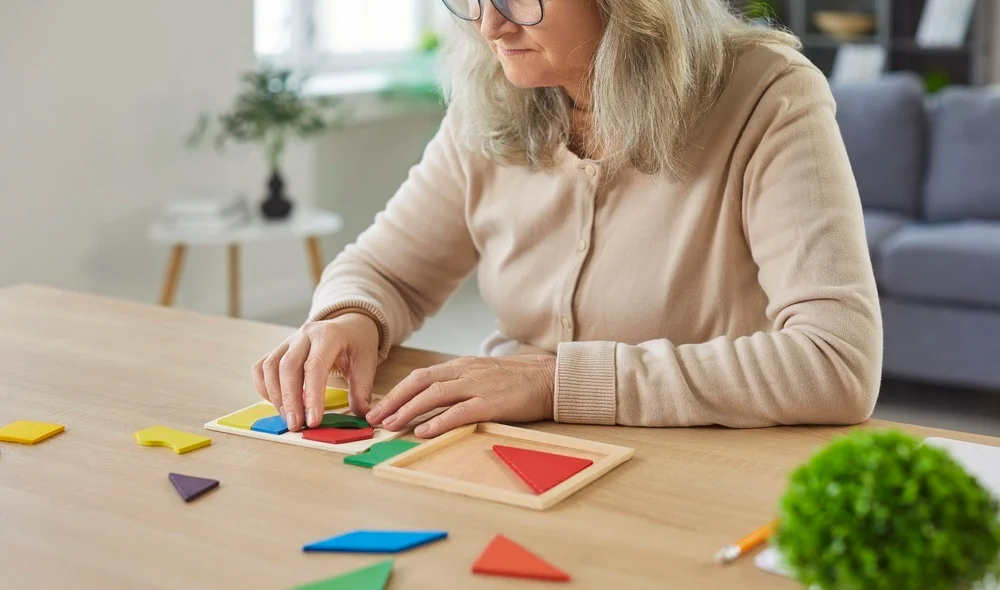
- Work on a puzzle at a comfortable difficulty level.
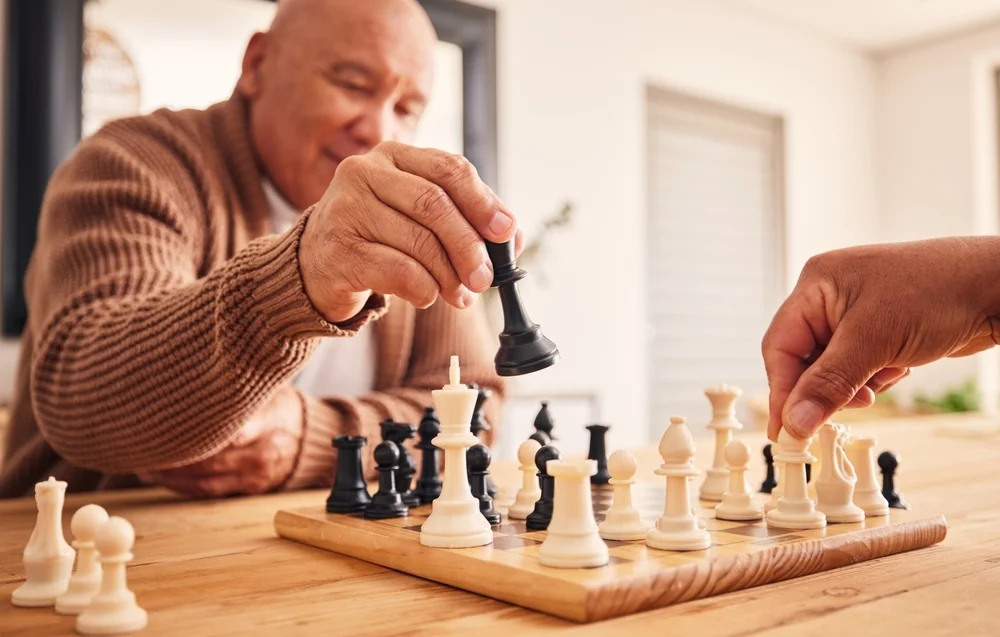
- Play a familiar card game or learn a new one.
- Return to a hobby that involves making choices or following steps.
More difficult doesn't automatically mean better. If an activity becomes frustrating, make it easier or try something else.
2. Social Engagement
Make interaction part of the activity. Work on the puzzle together instead of simply handing it over. Talk while you take a walk. Invite a friend over for cards.
For someone experiencing memory loss, familiar company or a smaller gathering may feel more comfortable than a busy social setting. Pay attention to what your loved one actually enjoys.
3. Physical Activity
Movement doesn't have to happen separately from mental engagement. Dancing to familiar music, gardening, or talking about what you see during a walk can get the mind and body involved at the same time.
The right activity depends on your loved one's health and mobility. If you're considering a significant change in physical activity, talk with their healthcare provider about what may be appropriate.
4. Emotional Support
Pay attention to how your loved one responds, not just whether they finish the activity. A little challenge can be engaging. Constant frustration usually isn't.
Give them time, offer encouragement, and avoid correcting every mistake. For someone living with Alzheimer's disease, matching activities to their abilities and watching for frustration can help you adjust the activity when needed.
Sometimes the best adjustment is simply making something easier.
5. Purposeful Routines
Work engagement into parts of the day that already have some structure. Your parent might read the newspaper after breakfast, walk with a neighbor in the afternoon, or help make dinner.
Everyday tasks count, too. Folding laundry or helping with a familiar recipe can give someone a chance to follow steps and use long-established skills without turning the activity into an "exercise."
6. Meaningful Participation
At home, you don't need scores or assessments to decide whether an activity is working. Look at your loved one.
Do they look forward to it? Do they want to participate again? Does the activity seem interesting without becoming exhausting or frustrating?
Those answers can tell you when to keep going and when to make a change. The goal is participation, not perfect performance.
Keeping the Whole Brain Engaged
Brain fitness is bigger than any one game or exercise. What matters is giving your loved one opportunities to keep using their abilities in ways that feel interesting and worthwhile. That's also the idea behind Whole Brain Fitness and Circle of Friends® at Belmont Village: meet residents where they are and make engagement a meaningful part of everyday life.
FAQs
Which brain fitness exercises for seniors have evidence supporting them?
Some forms of structured cognitive training have research behind them, but that doesn't mean every commercial "brain game" improves overall cognition or prevents dementia. The NIA's ACTIVE study, which included 2,832 older adults, found that targeted training improved the specific cognitive abilities participants practiced.
Physical activity can also support thinking, learning, and judgment skills as people age. Brain fitness doesn't have to stop at puzzles. Activities that involve movement, learning, or conversation can give older adults other ways to stay engaged.
Are there brain exercises that can improve memory?
Some types of cognitive training can improve the abilities a person practices, including certain memory skills. That doesn't mean practicing one memory task will improve every type of memory or prevent cognitive decline.
For everyday mental engagement, focus less on finding the "best" brain exercise and more on finding something your loved one will actually do and enjoy.
How does injury prevention fit into a whole brain fitness program?
Staying engaged is harder when an injury limits what someone can comfortably do. Injury prevention can help older adults continue participating in the movement and activities they enjoy.
For example, physical activity can improve physical function and help reduce fall risk. Families can also choose activities that fit their loved one's current mobility and abilities.
How do vaccines fit into a whole brain fitness program for seniors?
Whole brain fitness doesn't replace preventive healthcare. Staying current on appropriate vaccinations can help protect older adults from illnesses that could disrupt everyday routines or lead to serious complications.
Because vaccination recommendations depend on age and individual health factors, it's recommended to speak with a doctor or pharmacist about which vaccines are appropriate.
How important is effective healthcare communication to cognitive health?
If you've noticed changes in a parent's memory or thinking, their healthcare provider needs to know what you've been seeing. Specific examples can be much more useful than simply saying, "Mom seems more forgetful."
How does Belmont Village approach Whole Brain Fitness?
At Belmont Village, Whole Brain Fitness isn't a single class or brain game. We build opportunities for mental stimulation, movement, and connection into daily life.
Circle of Friends® applies that approach for residents with MCI and mild to moderate memory loss. Developed in consultation with Vanderbilt University's Center for Quality Aging, the program uses small-group activities that engage critical thinking, memory-body movement, learning, sequencing, long-term memory, and problem-solving.
Programs and availability vary by Belmont Village community, so families should contact their preferred location to learn about the support available nearby.
Disclaimers: This article is for informational purposes only.