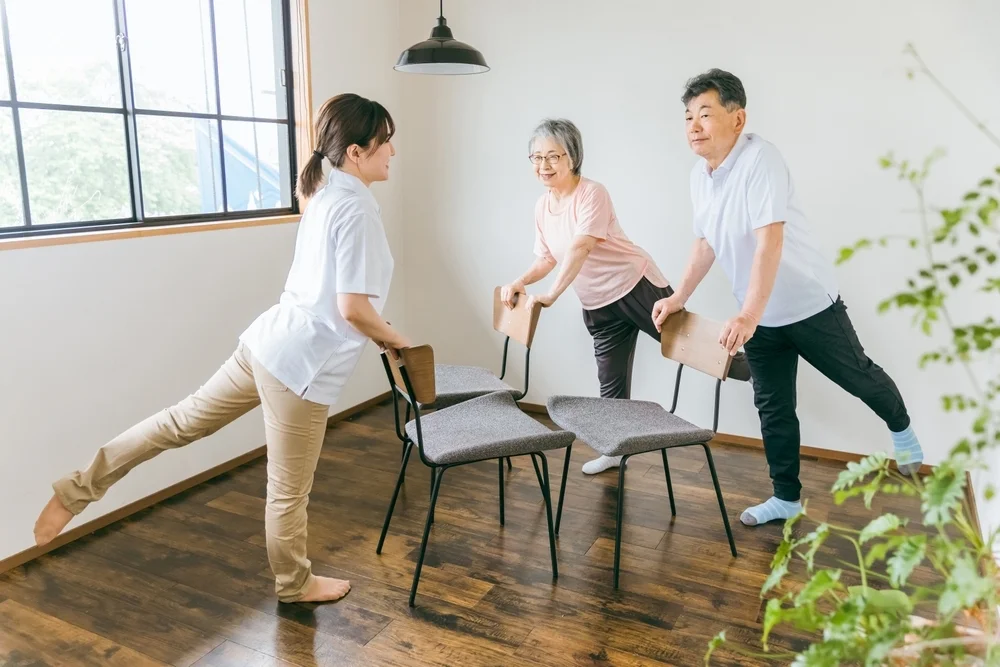
Simple Leg-strengthening Exercises Most Seniors Can Try Safely
Strong leg muscles support everyday movement and, therefore, independence as we age. Fortunately, strengthening the lower body doesn't have to be a complicated endeavor; even simple exercise routines can help older adults improve muscle strength, among other health benefits.
Why Strength Training is Important
Strength training helps older adults maintain muscle mass, bone density, and mobility. Lower-body strength, especially, is important because the leg muscles power many daily activities, including:
- Walking
- Climbing stairs
- Standing from a seated position
- Getting in and out of a car
- Maintaining balance
9 Leg-strengthening Exercises for Seniors
Before starting a new exercise routine, it is important to speak with a healthcare professional, such as a physical therapist, especially if you have existing injuries, balance concerns, joint pain, or chronic health conditions.
1. Calf Raises
Calf raises target the lower legs and ankles and are easy to perform in most spaces.
How to Do the Exercise:
- Stand behind a sturdy chair with feet hip-width apart.
- Hold the chair lightly for balance.
- Rise onto the balls of the feet.
- Pause briefly.
- Lower heels to the floor.
- Repeat for 8-12 repetitions (reps).
Modifications:
- Perform while seated.
- Reduce the range of motion.
- Try a single-leg variation later for more challenge.
Do Not Do This Exercise If:
- You have severe ankle pain or instability.
- Standing causes dizziness.
- Your healthcare professional advises against it.
2. Leg Raises/Leg Lifts
Leg raises can help strengthen the hips, quadriceps (quads), glutes, and abductors.
<h4>How to Do the Exercise:
- Stand behind a sturdy chair.
- Keep your starting position upright with feet hip-width apart.
- Slowly lift one leg forward or out to the side.
- Pause briefly.
- Lower the leg slowly with control.
- Repeat 8-12 reps (each side).
Modifications:
- Perform seated chair exercises.
- Lift the leg only a few inches.
- For added challenge, use ankle weights (only if approved by a healthcare professional).
Do Not Do This Exercise If:
- You experience hip pain during movement.
- You cannot safely balance while standing.
3. Lunges
Lunges help build strength throughout the lower body.
How to Do the Exercise:
- Stand with feet hip-width apart.
- Step a foot forward.
- Bend both knees slowly (front knee should be over the ankle).
- Push through the front heel to return to the starting position.
- Alternate legs for 8-10 reps per side.
Modifications:
- Hold onto a countertop or sturdy chair.
- Perform shallow lunges.
- Try stationary split squats instead.
Do Not Do This Exercise If:
- You have severe knee pain.
- Balance issues make stepping unsafe.
4. Sit-to-Stands
Sit-to-stands mimic the movement of getting out of a chair and are one of the most functional chair exercises for older adults.
How to Do the Exercise:
- Sit by a chair.
- Place feet on the floor; feet should be hip-width apart.
- Lean forward slightly.
- Push through the heels to a standing position.
- Slowly sit back down.
- Repeat for 8-12 reps.
Modifications:
- Use your hands on the armrests.
- Add a cushion to raise the seat height.
Do Not Do This Exercise If:
- Standing from a chair causes severe pain or dizziness.
5. Step-ups
Step-ups may help improve the strength used during climbing stairs.
How to Do the Exercise:
- Stand facing a low step.
- Hold a railing or sturdy surface if needed.
- Step up with one foot.
- Bring the second foot up.
- Step back down slowly.
- Repeat 8-10 reps per leg.
Modifications:
- Use a lower step.
- Perform slowly for better control and added resistance.
Do Not Do This Exercise If:
- You cannot safely step up without losing balance.
- You have severe knee or hip pain.
6. Squats
Squats can help strengthen multiple lower-body muscle groups at once. Research has shown they may support activities like walking and climbing stairs.
How to Do the Exercise:
- Stand in front of a sturdy chair.
- Place feet slightly wider than hip-width apart.
- Bend your knees and lower slowly as if sitting down.
- Pause briefly.
- Push through your heels to stand.
- Repeat for 8-12 reps.
Modifications:
- Use the chair for support.
- Perform partial squats only.
Do Not Do This Exercise If:
- You experience significant knee pain.
- Your healthcare professional recommends avoiding squatting movements.
7. Knee Extensions
Knee extensions isolate the front of the thighs and may support knee stability.
How to Do the Exercise:
- Sit tall in a sturdy chair.
- Slowly extend one leg until it is nearly straight.
- Pause briefly.
- Lower slowly.
- Perform 8-12 reps per side.
Modifications:
- Perform fewer repetitions.
- Reduce the extension height.
Do Not Do This Exercise If:
- Straightening the knee causes pain or swelling.
8. Glute Bridges
Glute bridges strengthen the hips and backside while supporting stability.
How to Do the Exercise:
- Lie on the back; knees should be bent and the feet flat.
- Keep feet hip-width apart.
- Tighten your abdominal muscles.
- Lift your hips slowly.
- Pause briefly at the top.
- Lower back down slowly.
- Repeat for 8 to 12 reps.
Modifications:
- Lift only partway.
- Place a pillow under the head for comfort.
Do Not Do This Exercise If:
- Lying flat causes discomfort or dizziness.
9. Lateral Lunges
Lateral lunges help strengthen the abductors and improve side-to-side movement.
How to Do the Exercise:
- Stand with feet wider than hip-width apart.
- Step to one side.
- Bend the stepping knee while keeping the opposite leg straight.
- Push back to the starting position.
- Alternate sides for 8 to 10 reps.
Modifications:
- Hold onto a countertop for support.
- Perform smaller side steps.
Do Not Do This Exercise If:
- Side movement causes hip or knee pain.
- You have difficulty maintaining balance.
Making the Most of Strength Exercises
Even the best leg-strengthening exercises are even better when combined with other healthy habits. Many experts recommend pairing strengthening exercises with:
- Walking or other cardio activities
- Stretching and balance exercises
- Nutritious meals
- Consistent sleep habits
FAQs
Can shoes support leg strength?
Supportive, non-slip footwear may improve comfort and balance during workouts and daily activities, which in turn may support exercises for stronger legs.
Can older adults regain leg strength?
Many older adults can improve strength, balance, and mobility through consistent physical activity.
Key Takeaways
Leg-strengthening exercises may help older adults maintain independence and confidence in daily life. They don't have to be complicated exercises, either; what's important is that the senior in question is consistent with their routine.
Disclaimers: This article is for informational purposes only. It does not constitute professional or medical advice. Please direct any and all questions regarding diet and physical activity to a licensed healthcare provider.