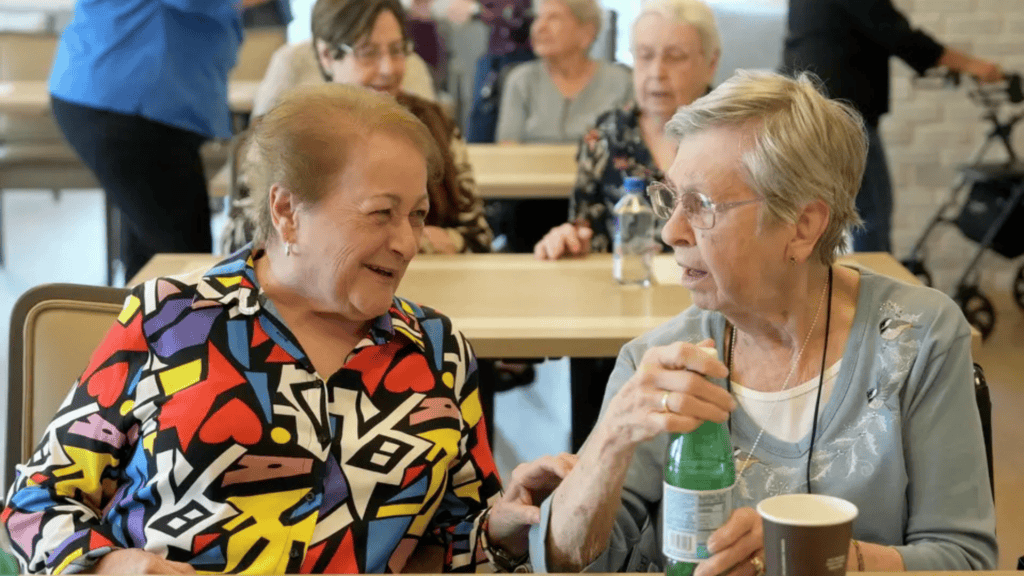
Rice University assistant professor Kirsten Siebach guided her students through a semester’s worth of material in one hour. They discussed the history of exploration on Mars, watched a video about dried-up rivers on the red planet, and learned what it’s like to drive a rover.
But this wasn’t a geology course at the private university’s oak-lined campus. And most of the students were over 80.
This was a class for 14 residents at Belmont Village Senior Living in Hunters Creek, among the hundreds of older adults taking non-credit courses through Rice’s “Lifelong University” program at dozens of Belmont facilities across the country.
“They have so much left to give,” said Korin Brody, a Rice administrator who helped create the program. “And they’re better for it.”
Rice officials believe they’re the only university offering online, yet interactive, education at senior living homes at such a large scale. The program engages an aging population often overlooked in higher education, and the response from Belmont residents has been enthusiastic, Belmont leaders said.
“Taking a class with somebody like her would make you want to be in it,” Rui Roberts, 84, said after the Mars lesson last week. She recalled her own college days in the early 1960s: “I took a geology class with an awful professor.”
Rice’s Lifelong University was born out of the pandemic, when for-credit courses moved online but professors struggled to get their non-credit offerings to their students — most of whom were in older age groups. It sparked a realization: Even as in-person courses would eventually restart at the Glasscock School of Continuing Studies, there was a whole group of people who would stay mostly homebound after Covid and deserved more attention.
Patricia Will, founder and CEO of Belmont, said she was thrilled when Rice approached the company to participate in a “micropilot” of the program. It’s common for people to come into assisted living communities to teach — and Belmont continues to have some in-person lectures — but the company had never found a program like Rice’s, which has a steady stream of professors teaching from a variety of topics.
For Will and others at Belmont, Lifelong University helps fulfill an important purpose. Learning new things in older age aids cognitive health, and so does social engagement.
Linda Cubbison, 78, said she feels like a different person since moving into Belmont, and the Rice classes have contributed. At home, she often stayed in her room, she said. But at Belmont, she’s taking every opportunity she can to exercise her brain, and it’s made her happier.
“I have known people who say ‘I love to learn,’ and they have three or four degrees, and I’ve never understood it,” Cubbison said. “But with this, I understand where they’re talking about. I don’t want to go back to school, but I just think I learn every single day.”
Virtual and interactive
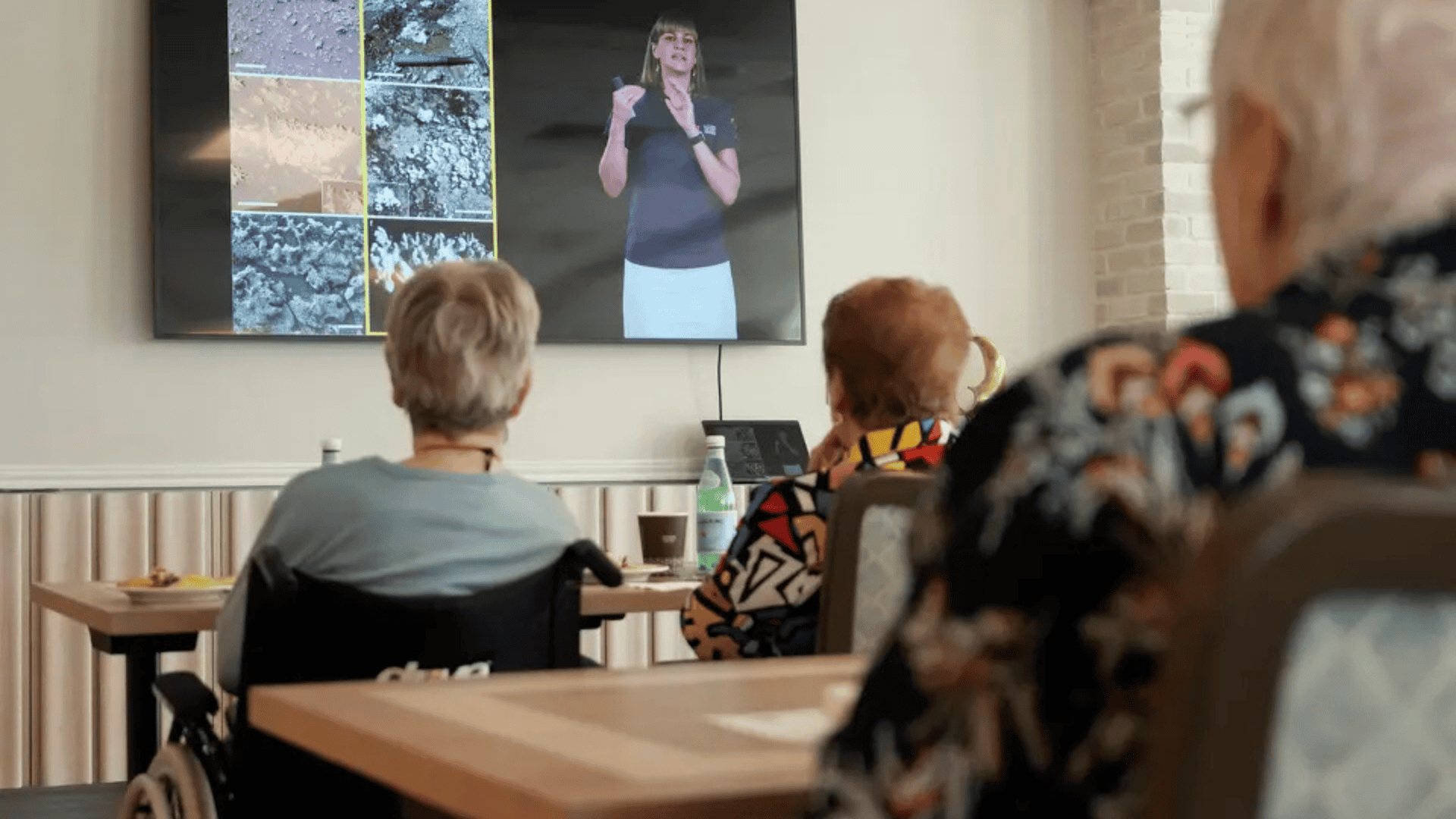
Residents at Belmont Village Senior Living participate in a Rice University’s Lifelong University class through the Glasscock School of Continuing Studies in Houston Friday, March 27, 2026. The virtual session titled Driving Curiosity: The Evolution of Martian Science by Kirsten Siebach, assistant professor in the Rice University Department of Earth, Environmental, and Planetary Sciences is shown on the screen.
The Glasscock School launched the “micropilot” of the program in 2021, and Rice has been testing out the approach with Belmont ever since, growing until it has reached 34 of the company’s communities.
The courses are asynchronous — meaning pre-recorded — but they’re also interactive. The professor speaks virtually, but the lessons are broken up into sections, giving a Belmont facilitator the opportunity to ask questions in between. That time also encourages the students to connect the material back to their own experiences.
Afterward, the facilitator can help the students find materials to continue their learning, or they can structure follow-up activities inspired by the lesson, said Brody, Glasscock’s interim director in its Center for Community Learning and Engagement. Some of the professors also hop on video calls to answer the residents’ questions.
Will, the Belmont CEO, said the classes address a problem for many senior living communities.
“When I entered this industry roughly 30 years ago, the favorite past time in communities … was bingo,” Will said. “The sophistication of the residents who come to live with us … to be able to continue to learn is such an important driver. And the challenge was, how do you feasibly deliver that educational, intellectual enrichment without just handing them a book?”
Brody said Rice hopes to add a creative workshop component to the program and renew with Belmont after the pilot ends this summer. But school officials also have ambitions to bring Lifelong University to other retirement companies nationwide, and potentially to community organizations in the local region. Any expansion will hang on keeping the interactive components, however.
“If we if we can’t do it to that level, then we step back and think, ‘Okay, should we be doing this?'” Glasscock School Dean Robert Bruce Jr. said. “When we think about expansion, we’re being pretty thoughtful about it.”
‘Always interesting’
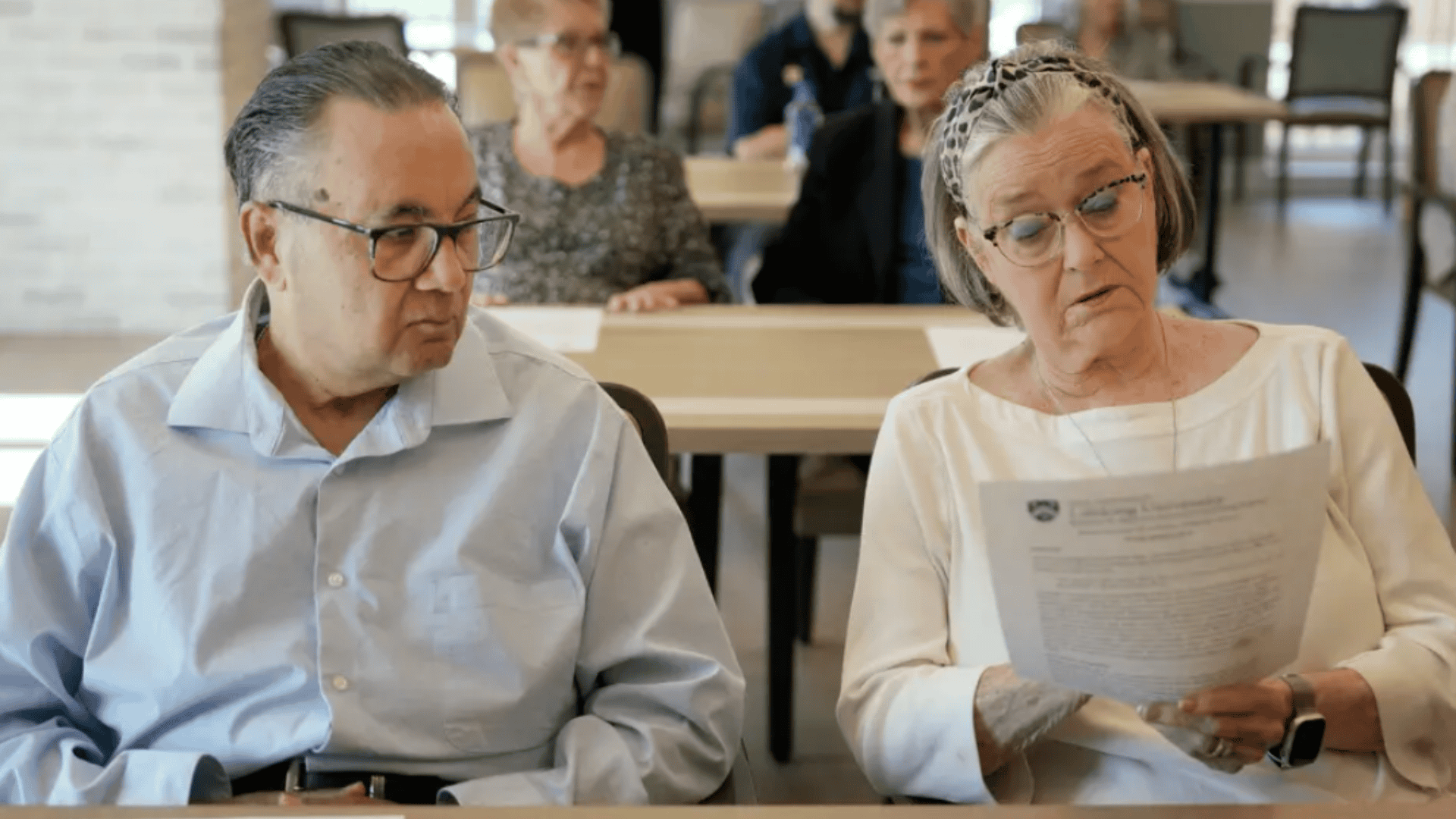
Manu Kanwar, left, and Linda Cubbison, right, residents at Belmont Village Senior Living prepare to participate in a Rice University’s Lifelong University class through the Glasscock School of Continuing Studies in Houston Friday, March 27, 2026. They participated in a virtual session titled Driving Curiosity: The Evolution of Martian Science by Kirsten Siebach, assistant professor in the Rice University Department of Earth, Environmental, and Planetary Sciences.
Several Belmont residents said they’ve learned about numerous topics through Lifelong University that they never would have sought out on their own. Popular classes have included ants and Art Deco.
Dorine Cormier, 82, said the Art Deco lesson elicited some memories, and several of her neighbors even brought in their own belongings to share.
“It’s always interesting,” Cormier said. “We sit there and we’re amazed. And they’re good at explaining.”
Debra Dickinson, a Glasscock instructor, has taught several courses on Broadway for the program. She said she prefers teaching the older generation, partly because they know about people like Ethel Merman or have their own experiences to lend to the conversation.
At her in-person classes at the Glasscock School, some people have shared that they watched the opening night of “Oklahoma!,” or saw Julie Andrews perform in “My Fair Lady.”
Dickinson misses hearing some of those stories while doing the pre-recorded lectures, but she said it’s still a “gift” to be able to teach people from afar. Rice wouldn’t be able to have the same reach without a virtual format, she and other Rice officials said.
“It’s nice to be able to be in the room with the people, let them interrupt the lecture,” Dickinson said. “I do miss that, but it’s a benefit to people who can’t get to Rice.”
Many of the residents have rich educational and career backgrounds that they bring to the classes, Will said. Cubbison was a floral designer, Cormier worked in investor relations, and Roberts worked in medical administration.
Roberts and her friend, Robyn Webb, 83, live at the West University Belmont location but came to the class at Hunters Village last week for a field trip. Roberts said she was surprised to find it so fascinating.
Webb has also attended most of the Lifelong University classes. She said she hasn’t stopped loving to learn since graduating from Slippery Rock University decades ago.
“I have enjoyed every single one,” Webb said. “I’m curious about a number of things. I find that even though you may know a lot about what they’re going to talk about, you’re always going to learn more.”